
How to Identify Any ZF 8HP Valve Body — Gen 1, Gen 2, Gen 3 and Mild Hybrid
· 7 min read · Brian Shull, Applied Torque Solutions, Anna, Texas
Solenoid colour tells you the generation. Orange and white is Gen 1, yellow and blue is Gen 2, light blue is Gen 3. Here is every other difference, down to the separator plate stamp.
Chapters
The fastest way to tell one ZF 8HP valve body from another is the colour of the solenoids. Orange and white means Gen 1. Yellow and blue means Gen 2. Light blue means Gen 3. That gets you most of the way in about five seconds, and everything below is the rest of the way.
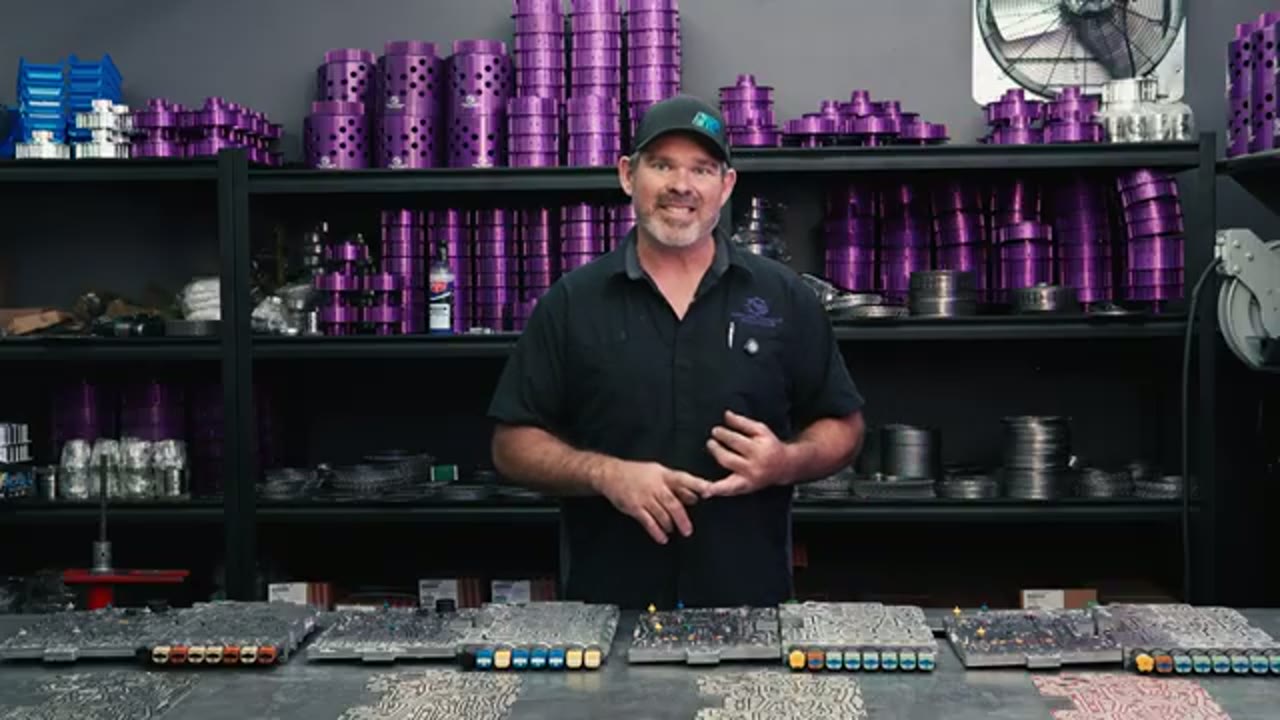
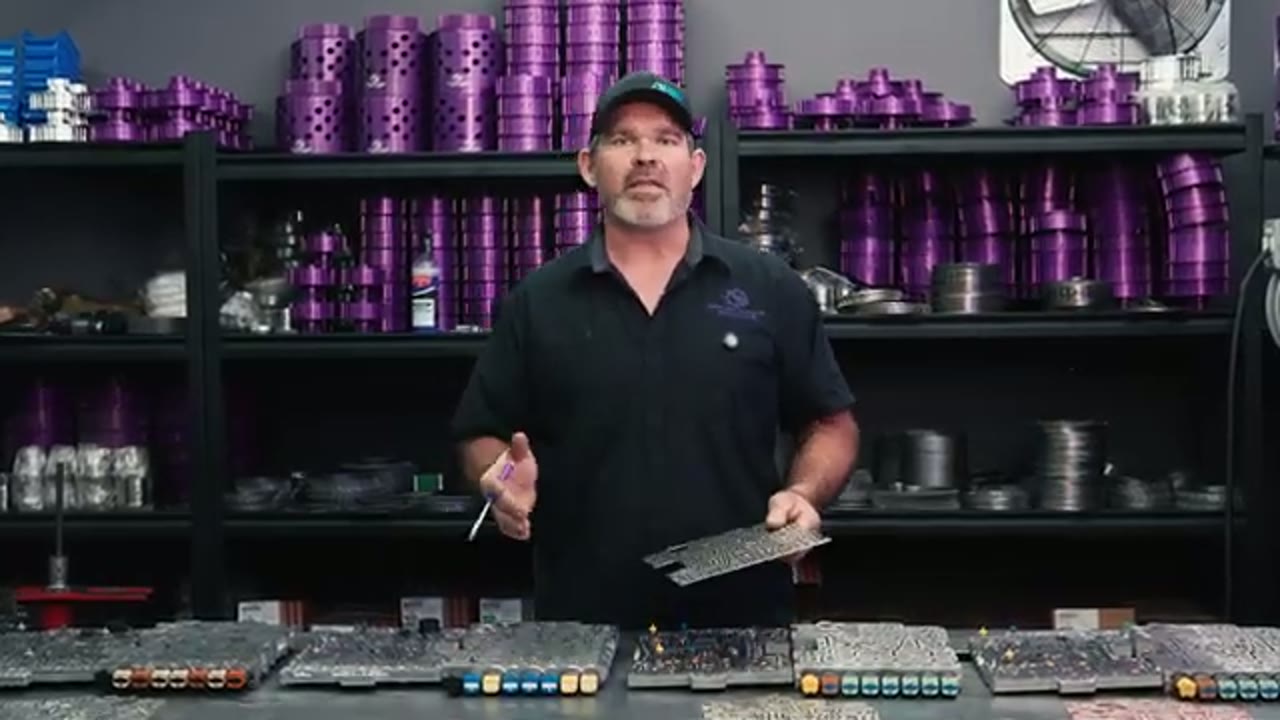
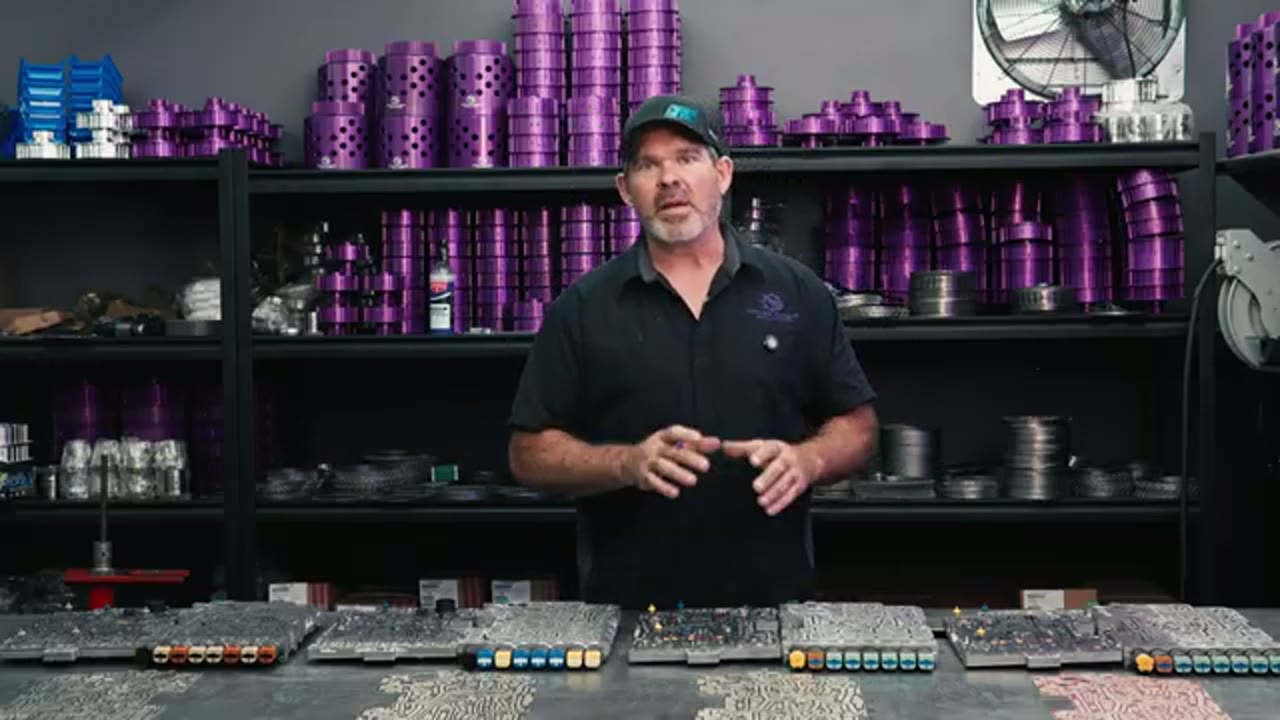
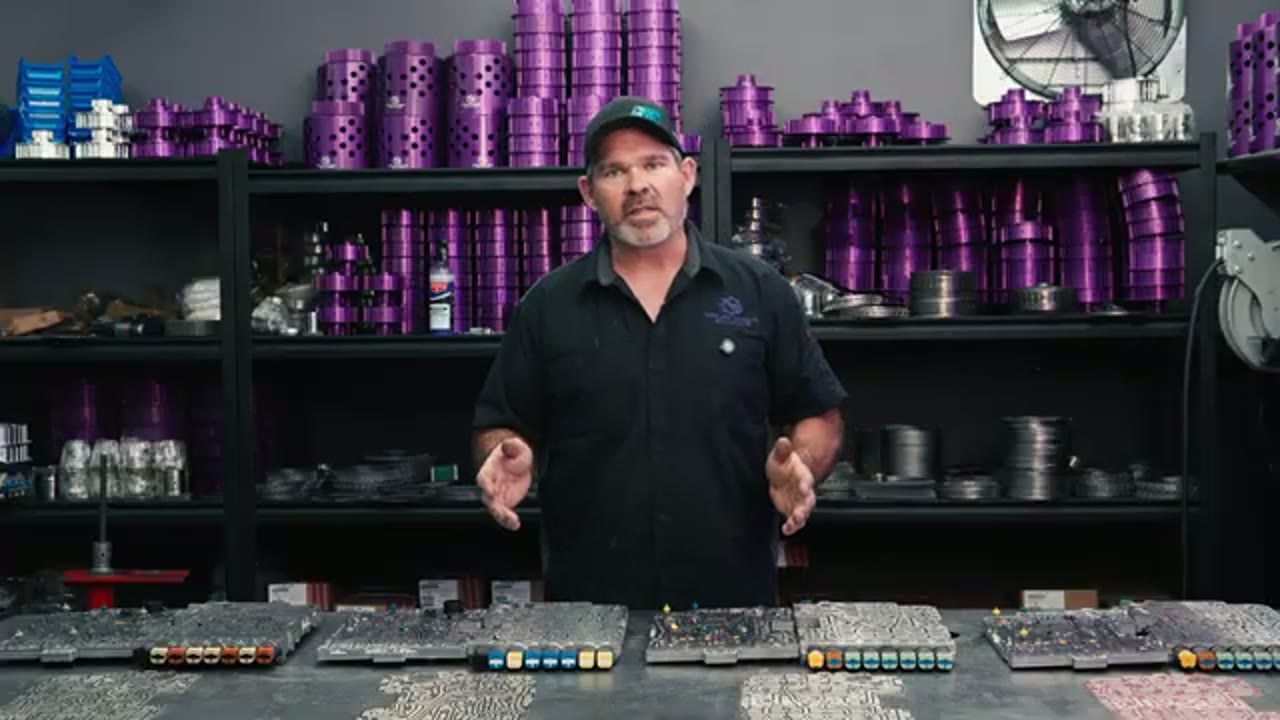
This is the written version of our full teardown. Brian has all four on the bench at once — Gen 1, Gen 2, Gen 3 and the Gen 3 mild hybrid — and goes through every difference: solenoid layout, which valves float and which are sprung, spring colours, accumulator and check ball counts, and the separator plate numbers that decide what you are allowed to order.
The short version
- Gen 1 — orange and white solenoids, plus a green park solenoid and a park release solenoid. 8HP45, 8HP70, 8HP90 and others.
- Gen 2 — yellow and blue solenoids. 8HP50, 8HP75, 8HP95 and ZF Powerline.
- Gen 3 — light blue solenoids. 8HP51 and 8HP76, which means BMW, and the Toyota GR Supra that runs the BMW 8HP51.
- Check balls drop as you go: seven on Gen 1, six on Gen 2, two on Gen 3.
- Gen 1 is the only generation with valves on the upper section, for the B2 clutch.
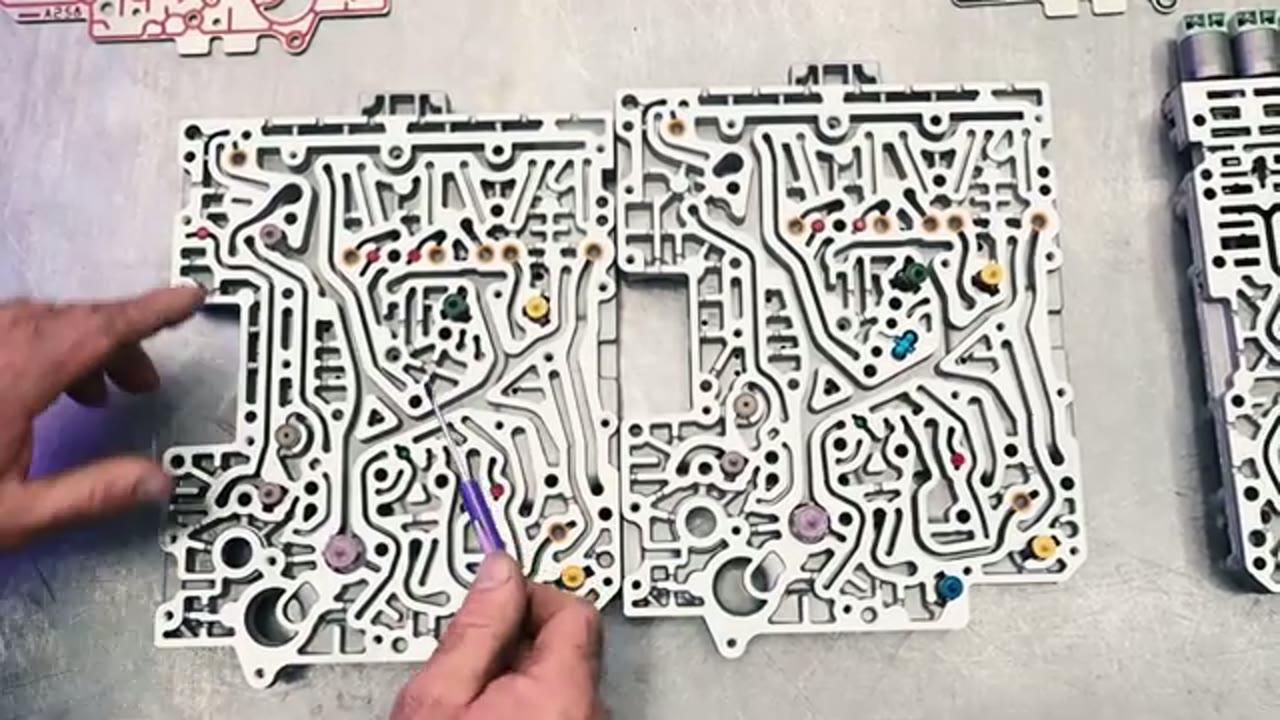
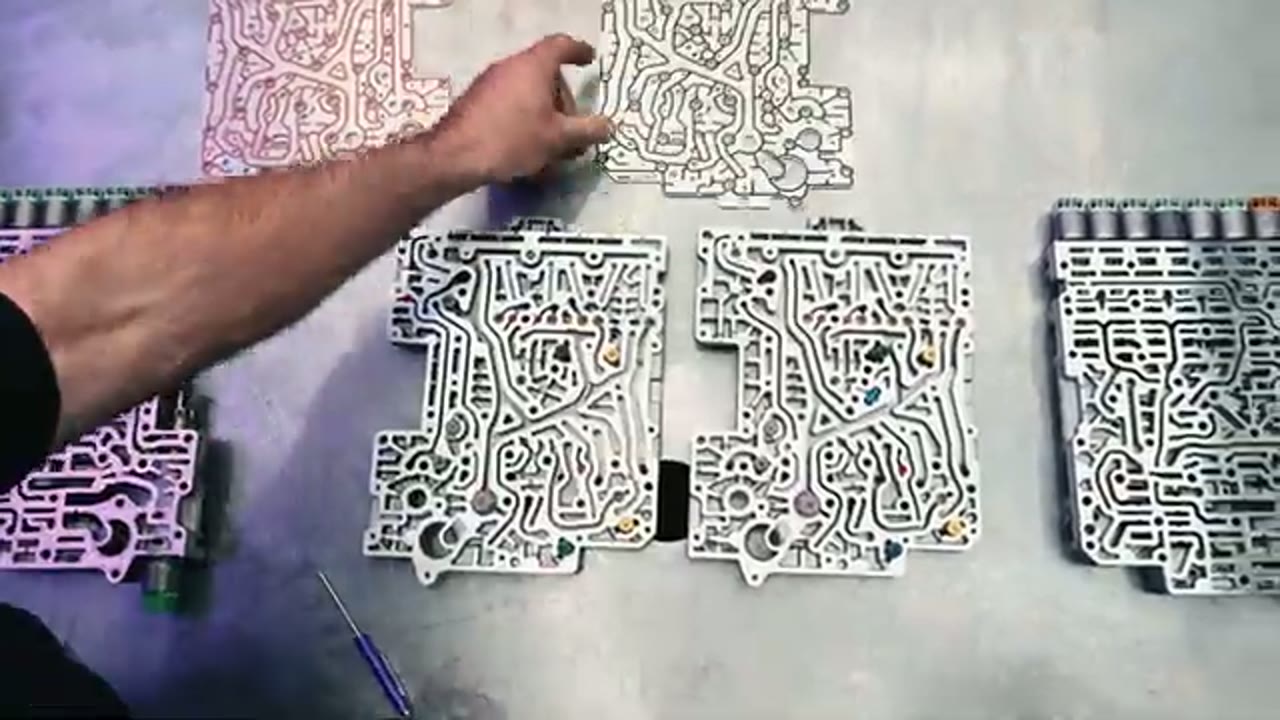
- Mild hybrid or not: read the red stamp on the separator plate. A258 / B258 is the mild hybrid. A247 / B247 is not.
Generation 1
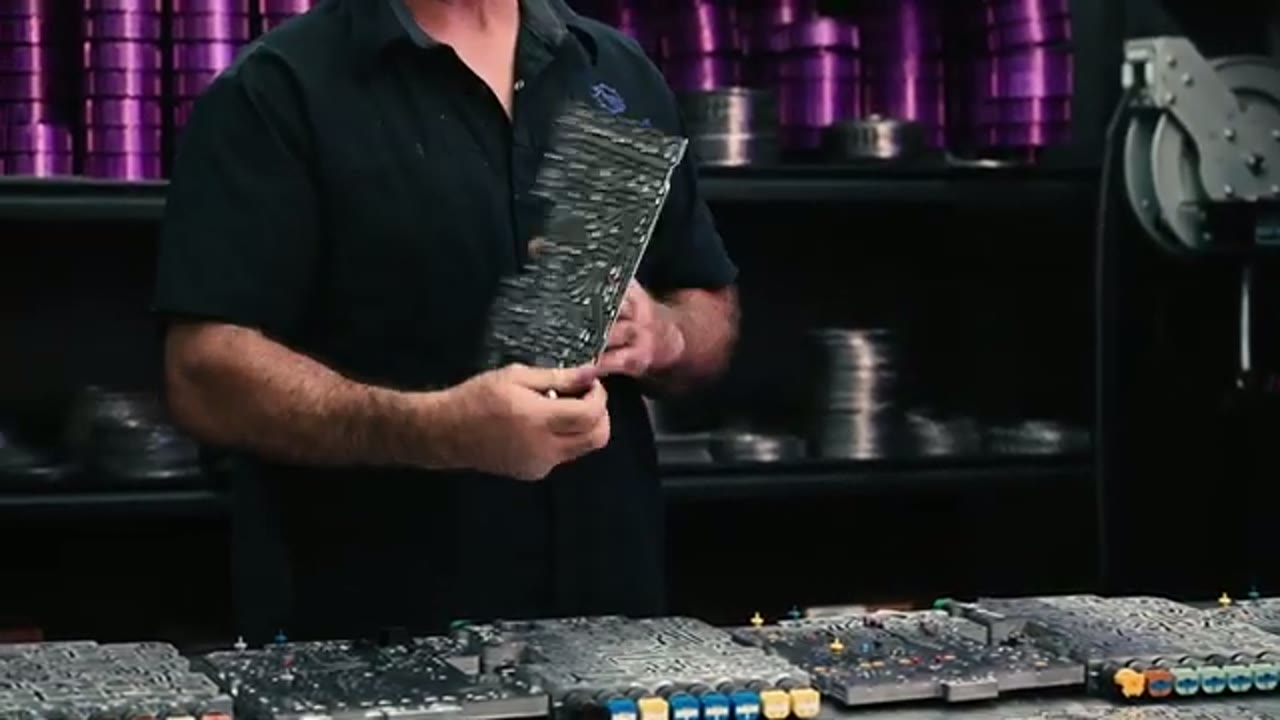
Gen 1 runs orange and white solenoids, and it is the only one with two park-related solenoids: a green park solenoid and a separate park release solenoid. The layout across the body is A, D, B, E, C, then the TCC solenoid and the line pressure solenoid — and that same left-to-right pattern carries through every generation. Learn it once and you can read any of them.
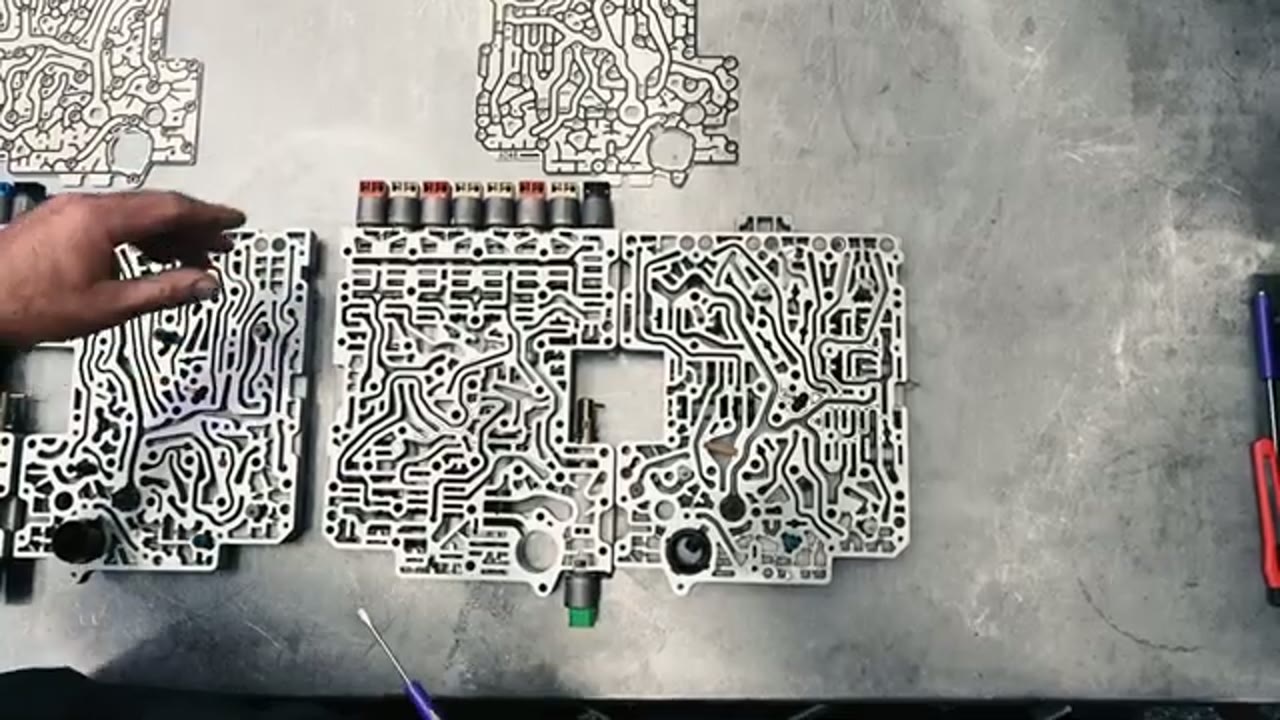
Every solenoid corresponds to an internal valve, and on Gen 1 those valves are a mix: some free-floating, some spring-loaded. That mix matters more than it sounds, because the free-floating ones are where a rebuild goes wrong. A free-floating valve should fall through its bore under its own weight with no resistance at all. If it drags, sticks, or you can feel it catching, the bore is scored and the valve body needs attention before anything goes back together.
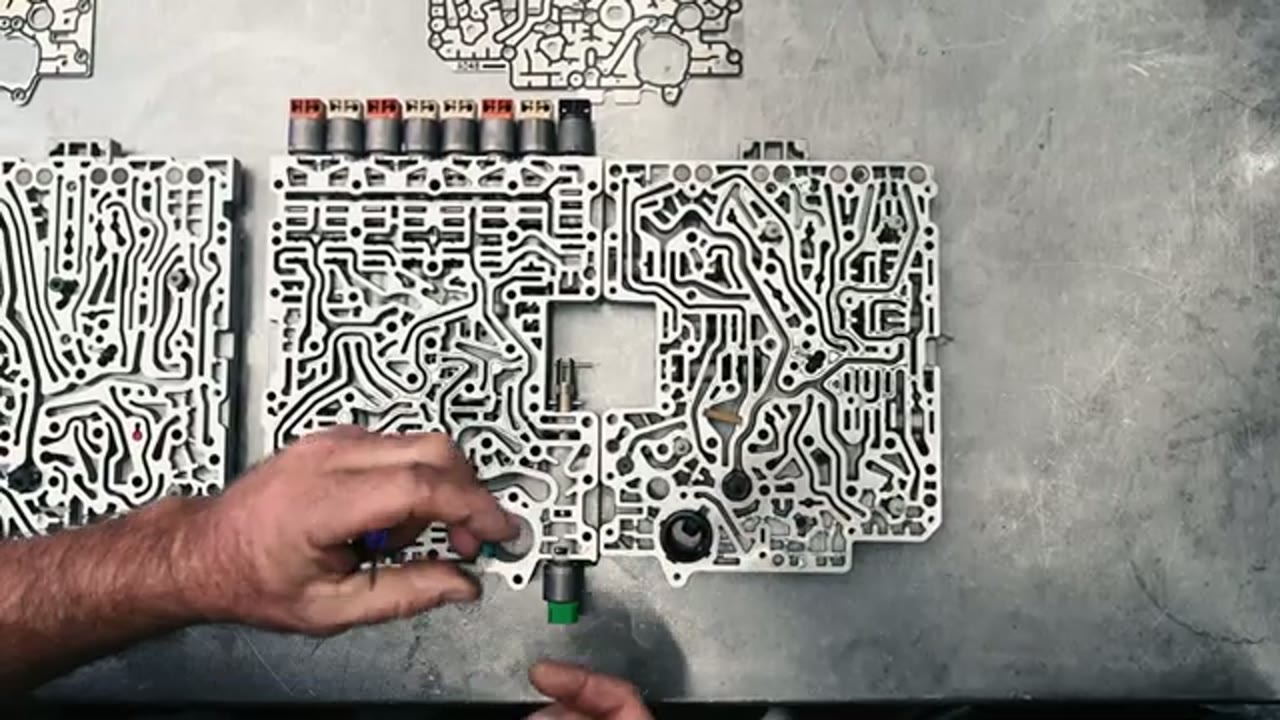
Spring count on Gen 1 is four gray springs, one blue and one large black. It carries seven accumulators and seven check balls — and one of the check ball bathtubs is empty from the factory, so an empty pocket is not a missing part.
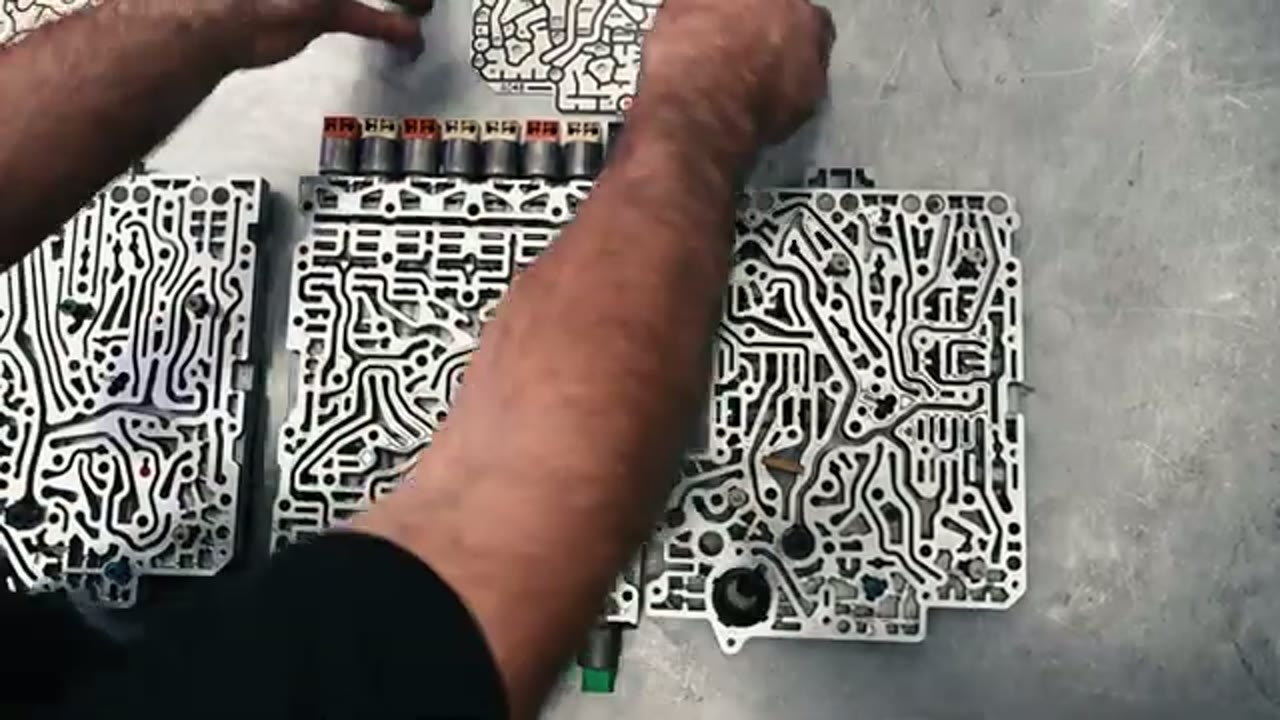
The thing that makes Gen 1 unmistakable is up top. It is the only generation with valves on the upper section of the valve body, and those valves are there for the B2 clutch. If there is machinery on the upper half, you are holding a Gen 1. Nothing after it has them.
Generation 2
Gen 2 covers the 8HP50, 8HP75, 8HP95 and the ZF Powerline. The solenoids switch to yellow and blue, but the layout pattern is the one you already learned on Gen 1.
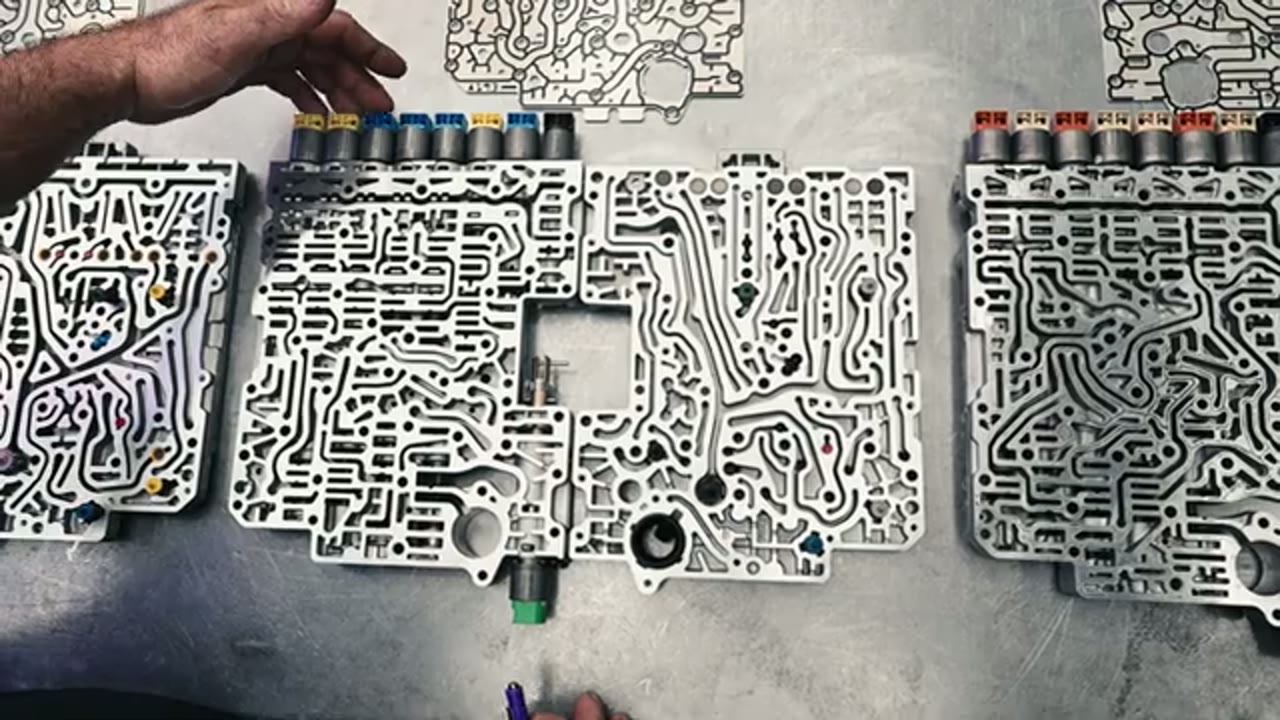
Two real changes underneath. Every clutch valve is now spring-loaded — the free-floating valves are gone, which removes the inspection step that catches people out on Gen 1, though you still want to confirm nothing binds. And the upper valves have been eliminated: the upper section on a Gen 2 is bare where a Gen 1 has the B2 hardware.
It keeps seven accumulators, but the check balls drop to six.
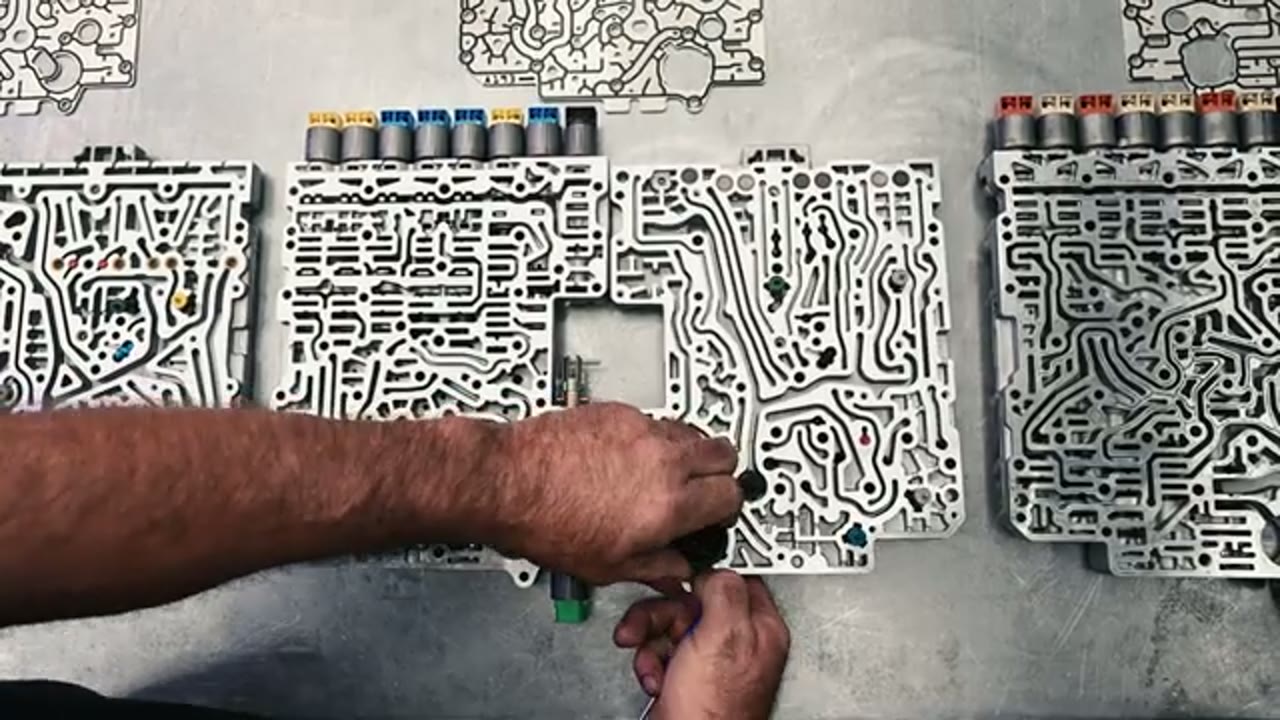
Read your separator plate before you order anything. BMW Gen 2 plates are commonly stamped A193 / B193, but the numbers vary by make and model even inside a single generation. The plate is marked on both faces, an A side and a B side, and getting the wrong one is an expensive way to find out they are not interchangeable.
Generation 3
Gen 3 is the 8HP51 and 8HP76. Brian describes these as found exclusively in BMW applications, which is right on the engineering — though it is worth saying plainly that this includes the Toyota GR Supra, because the A90 and A91 run the BMW 8HP51. If you own a Supra, this is your valve body.
The solenoids go light blue, same layout again, and all valves are spring-loaded.
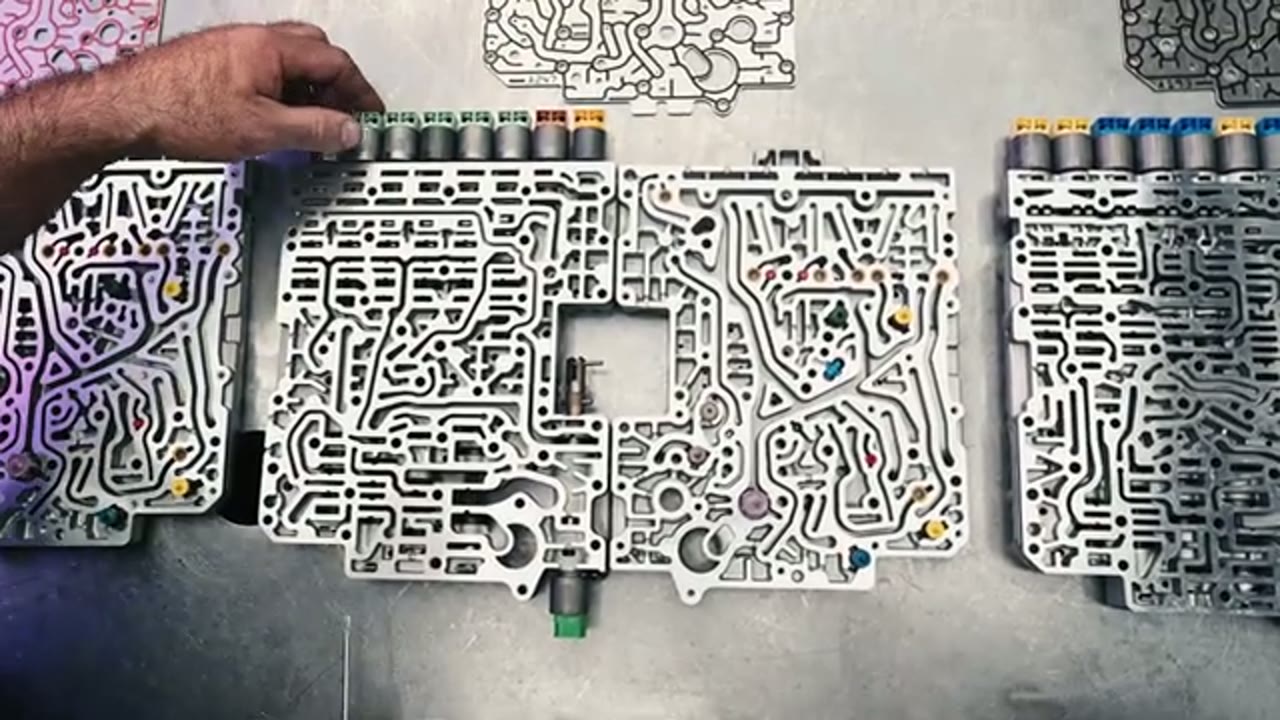
The upper section is where Gen 3 pulls away from everything before it. The spring colours are updated — two yellow, one blue, one green and one pink — and there are additional fluid filters that the earlier generations do not have.
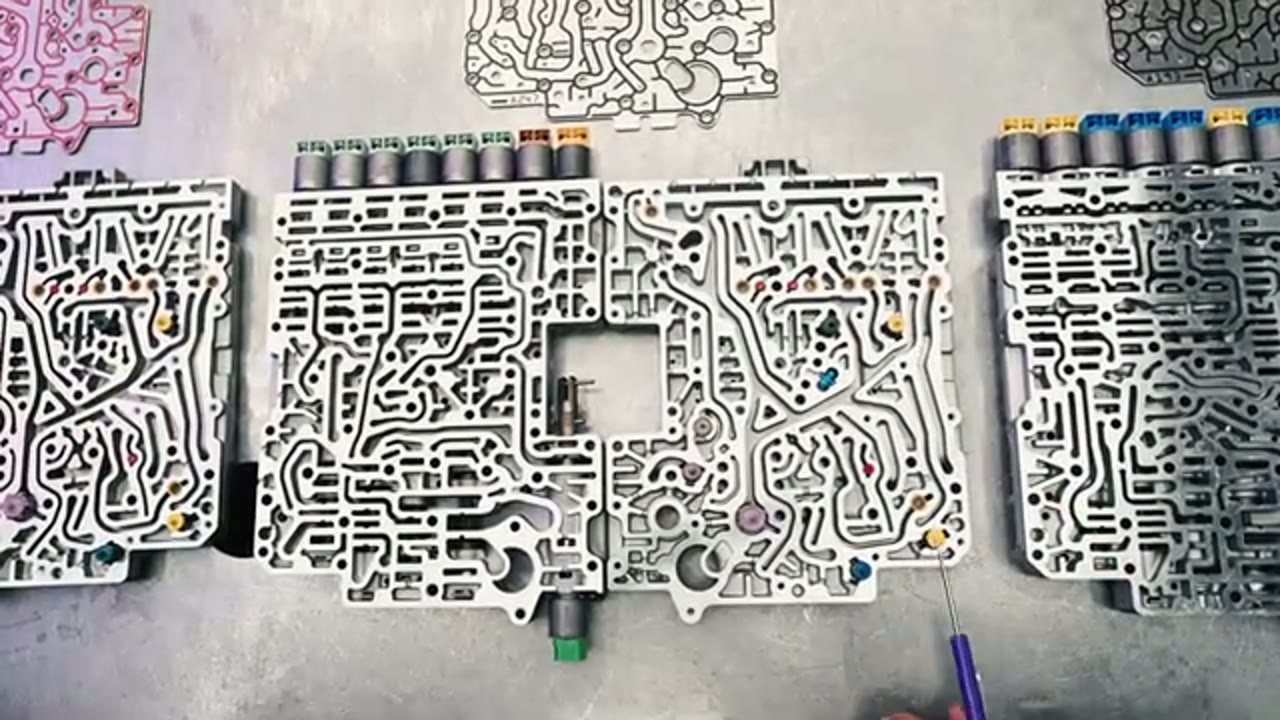
Check balls come all the way down to two: one green single and one blue double. Seven on Gen 1, six on Gen 2, two here.
And one change that is purely about servicing it: the primary feed and pickup tube is now removable from the outside of the valve body rather than being installed from the inside. If you have ever fought one out the hard way, that is the difference you notice first.
Gen 3 mild hybrid
This is the one almost nobody has documented, and it is easy to get wrong because the lower structure and the solenoid layout are nearly identical to a standard Gen 3. Side by side, at a glance, they look like the same part.
What differs is the internal channeling and the upper components. The double-sided check ball is eliminated, and an additional upper spring plus extra dampener components are added.
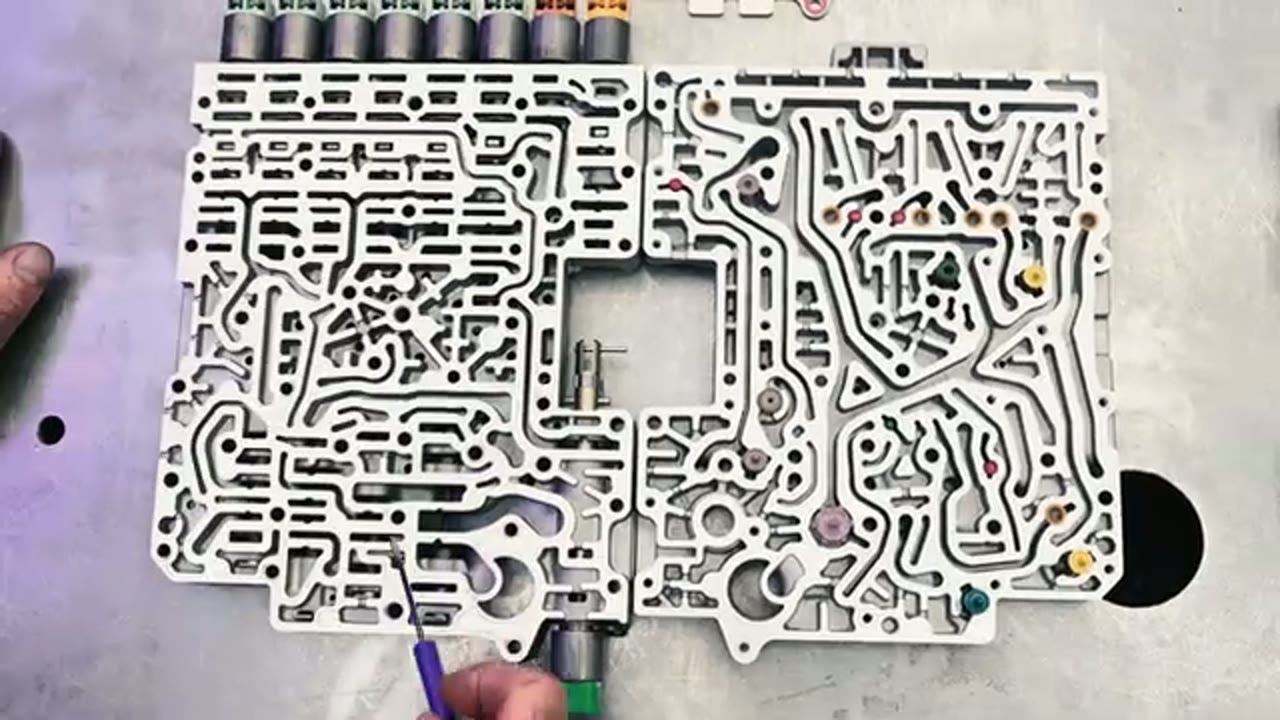
The reliable way to identify one is the separator plate. Mild hybrid units carry a red-stamped A258 / B258 plate. Standard Gen 3 units use A247 / B247. That stamp is the whole answer, and it takes two seconds to read.
If you are rebuilding one
- Check that every free-floating valve moves freely. No resistance, no scoring in the bore. On a Gen 1 this is the job; on Gen 2 and Gen 3 the valves are sprung, but confirm nothing binds.
- Photograph the configuration before you take anything apart. The generations look close enough to each other, and close enough to themselves mid-disassembly, to catch out people who have done this before.
- Clean everything properly after a major failure. Debris that stays in a bore comes back, usually into the part you just paid for.
- Read the separator plate part number. They vary by make and model even inside a generation, and they are marked with an A side and a B side.
Parts for the transmissions in this teardown:
- 8HP51 parts and kits
- 8HP76 parts and kits
- 8HP70 parts and kits
- 8HP90 parts and kits
- 8HP50 parts and kits
- 8HP75 parts and kits
Not sure which one you have? Use the vehicle selector on the home page. Find your transmission.